“My seat side leather is peeling or cracking.”
The raised support at the side is sometimes called the bolster. If the damage stays within that area and the surrounding leather is still sound, only the affected section may need replacement.
Localised Leather & Interior Trim Repair
Repair What’s Worn. Keep What’s Still Good.
Seat centre leather torn or cracked? Side leather peeling? Stitching split or coming undone? Damage in one area does not always mean replacing the entire seat cover or retrimming the whole interior.
Where the leather around the damage is still in good condition, the affected section may be restitched or replaced on its own. The same principle can apply to selected armrests, door trims and seat-back components.
You replace what is damaged — not what is still perfectly usable.
Photos show the result. Video makes the repair process easier to understand.
Watch how a damaged upholstery section is handled as part of a localised seat repair.
The repair focuses the work — and the cost — on the part of the seat that actually needs attention.
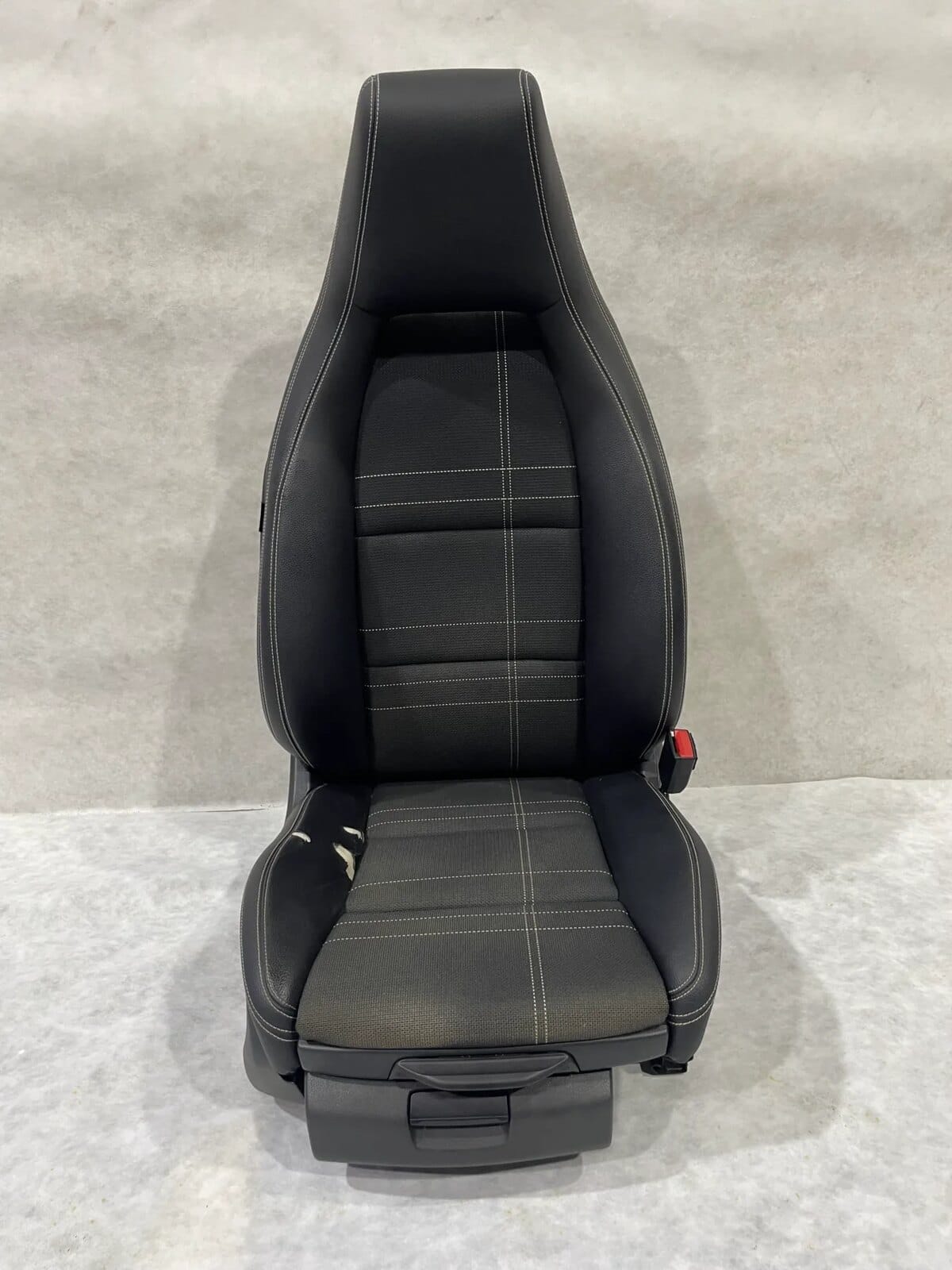
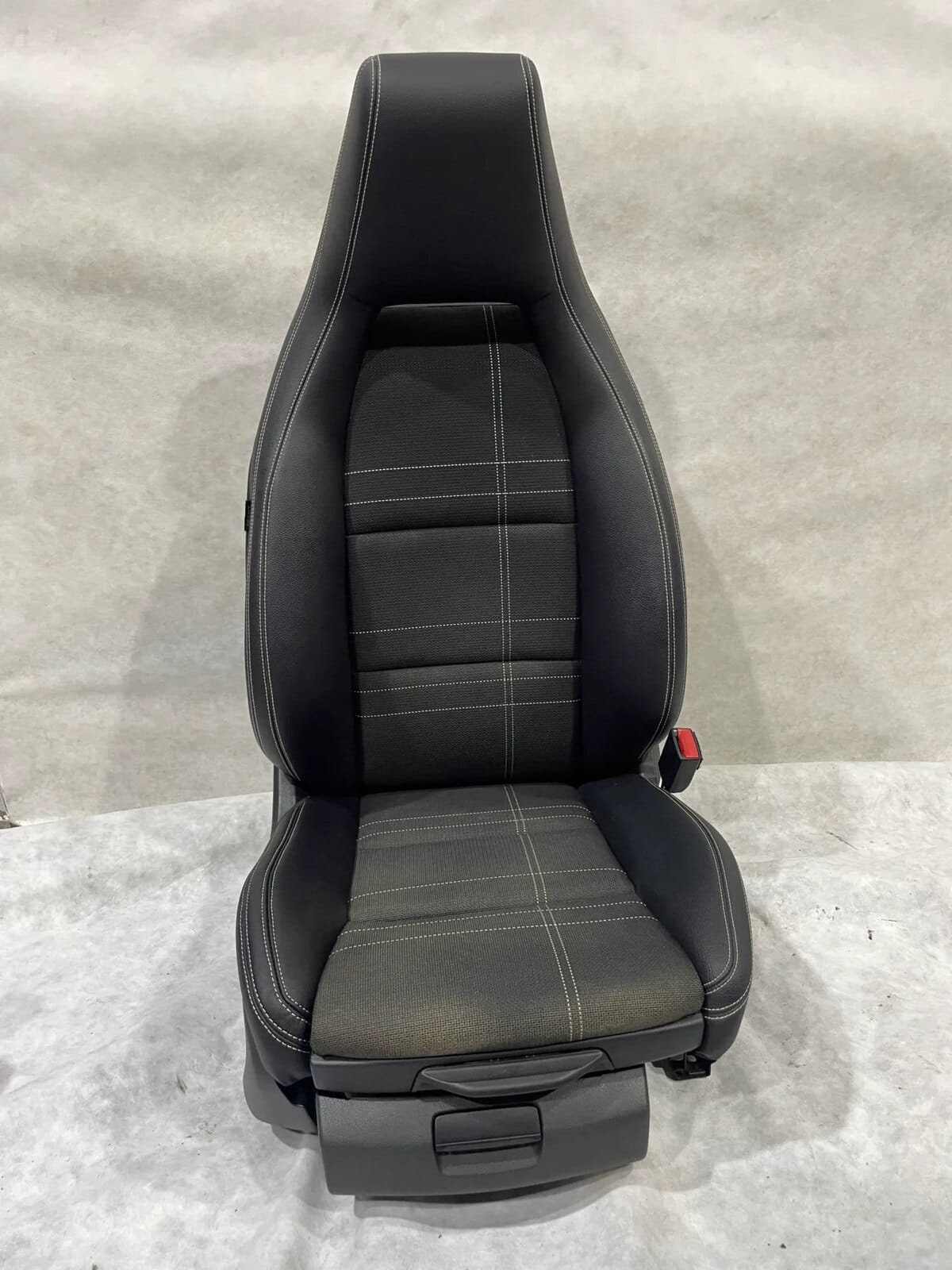
Replace what is damaged. Keep what is still good.
Replacing the damaged leather is only half the job. The new section still has to belong naturally beside everything that remains.
We select the leather colour, grain, surface character and suitable thread to coordinate as closely as practical with the surrounding upholstery. On an older interior, sunlight, cleaning and everyday use may have changed the original appearance, so matching is assessed against the seat as it exists today — not simply against a colour name or code.
Mercedes-Benz interiors are among the vehicles we frequently see for this type of localised repair, including torn centre-seat leather, peeling side leather, opened seams, damaged armrests, loose door trim and peeling around selected seat-back pocket areas.
We keep and source a range of automotive leather colours and matching thread options for many commonly encountered Mercedes-Benz interior shades, as well as colours used across other vehicle makes.
The badge, however, is not what determines whether a repair is possible. What matters is the construction and condition of the affected part, the surrounding upholstery and whether a suitable material match is available.
You do not need to know upholstery terms. Tell us where the leather is torn, peeling, cracked or coming loose, and send one wider photograph plus a close-up. We can identify the part from the photos and assess the condition around it.
The raised support at the side is sometimes called the bolster. If the damage stays within that area and the surrounding leather is still sound, only the affected section may need replacement.
An opened seam may be restitched, provided the material along the torn edge is still strong enough to hold new thread securely.
A tear, crack, cut or worn area in the middle of the seat base or backrest can be assessed separately from the leather around it.
Loose or peeling upholstery on the door may require removal, surface preparation and refitting or replacement, depending on the backing and its condition.
The leather on a centre-console lid or fold-down armrest can often be assessed separately without reupholstering the complete seat.
Seen on some Mercedes-Benz interiors, this area surrounds the rear storage pocket. Repair suitability depends on how the part is constructed and how far the surface has separated.
Use your own words. Clear photos matter more than knowing the technical name.
Many straightforward repairs involving one damaged leather section can be completed in approximately two hours, depending on the seat design, extent of damage, material availability and the work required.
Send us clear photographs first. We can assess whether the damage is suitable and advise on the expected appointment time before the vehicle comes in.
We look at the damaged area, the leather around it and whether a localised repair is appropriate.
Leather colour, surface character and thread are selected to coordinate as closely as practical.
The worn or torn section is removed, reproduced in new leather and fitted into the existing seat-cover construction.
The upholstery is refitted and checked for fit, colour relationship and overall appearance.
Actual repairs completed in our workshop. Use the filters to find repairs for your car brand, model and model code.
Showing all 1 repair project
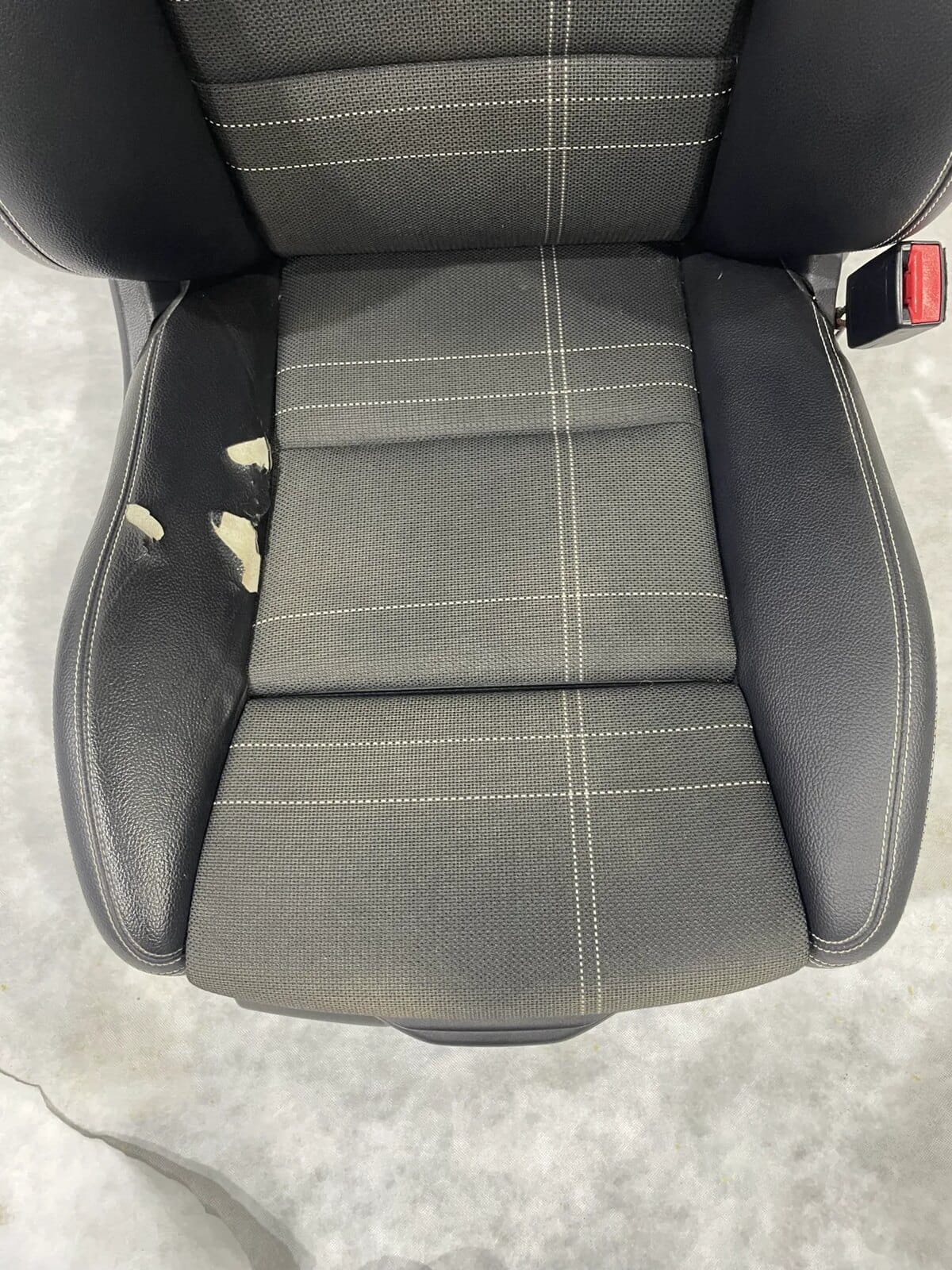
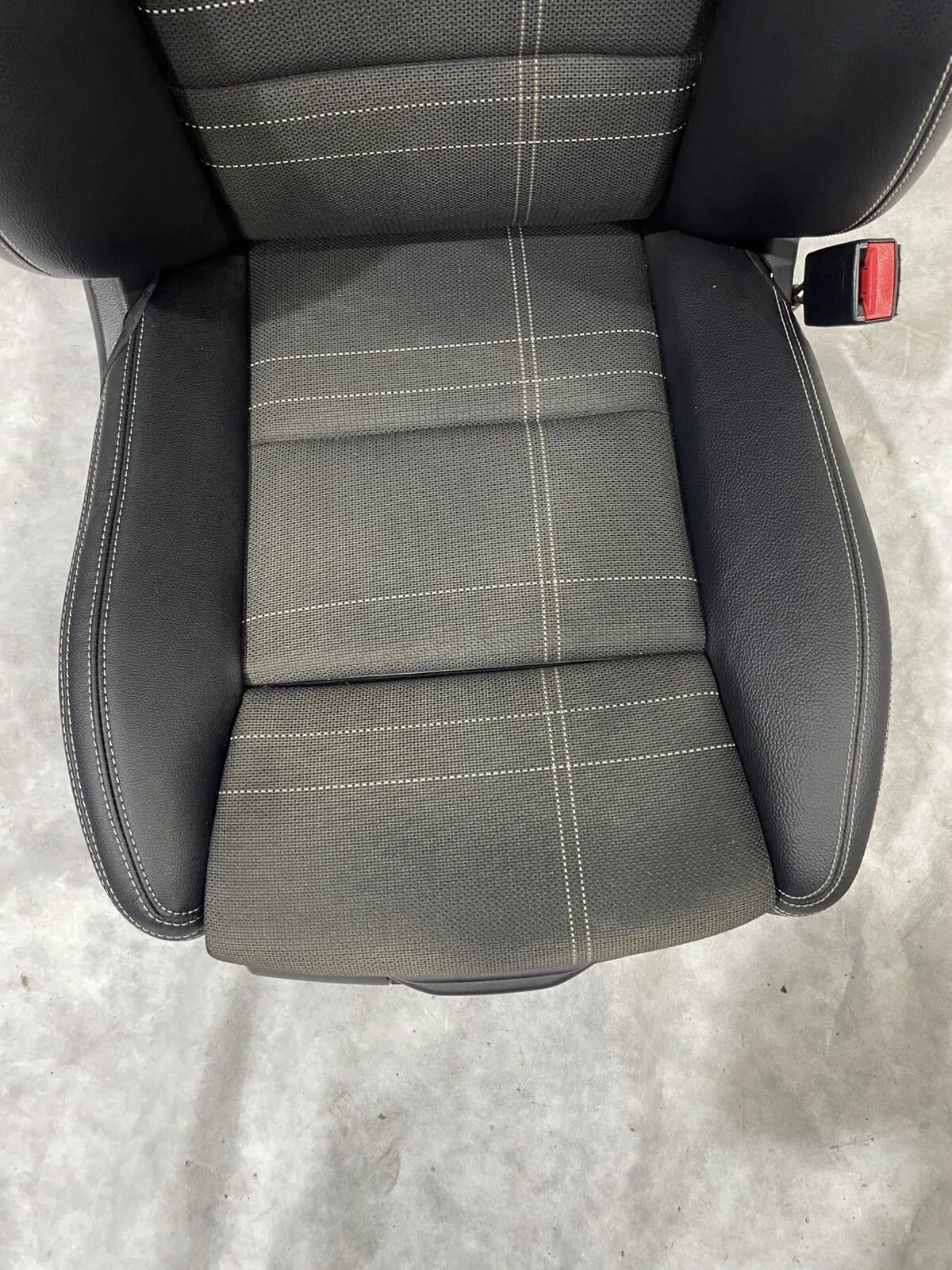
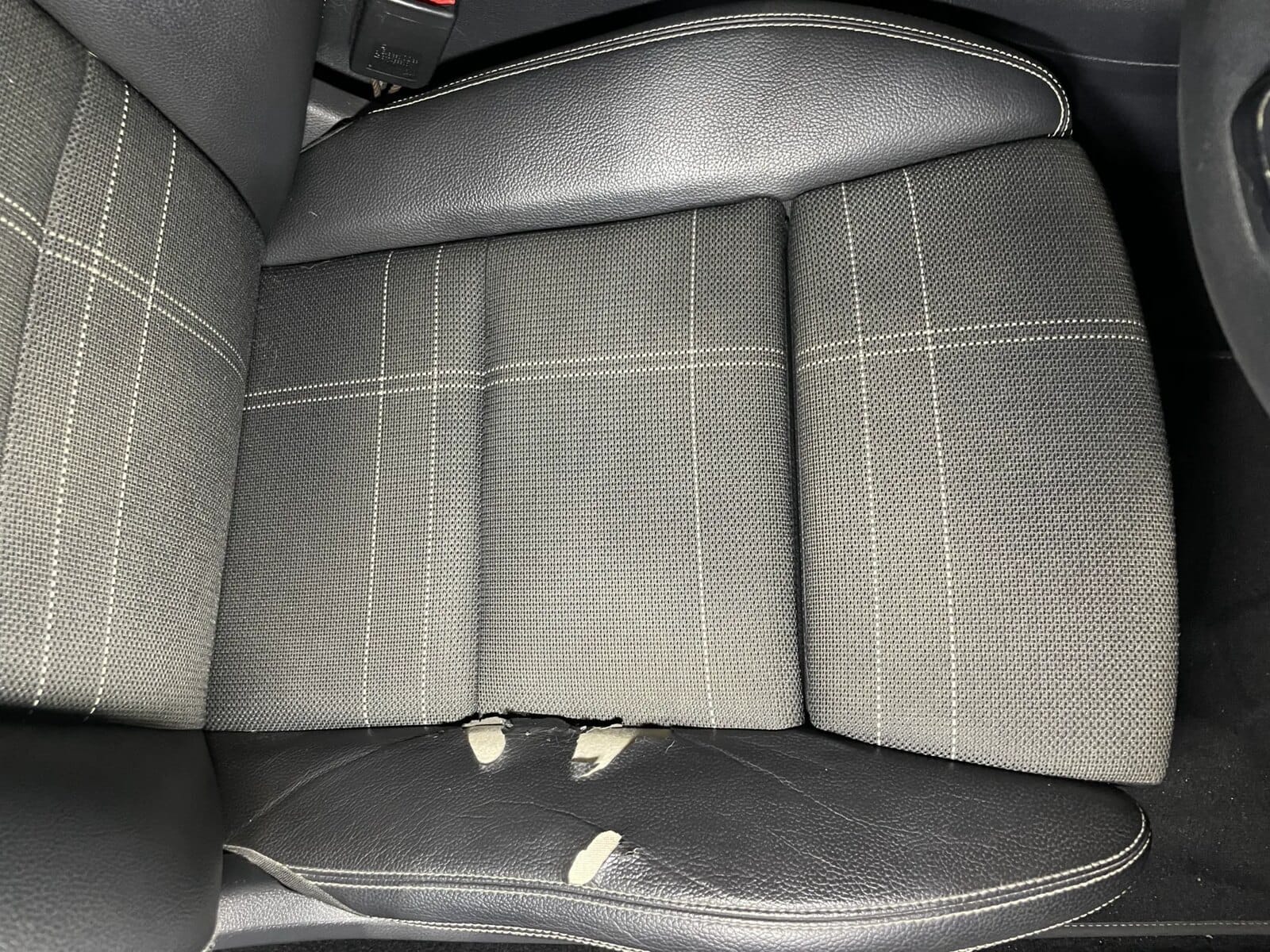
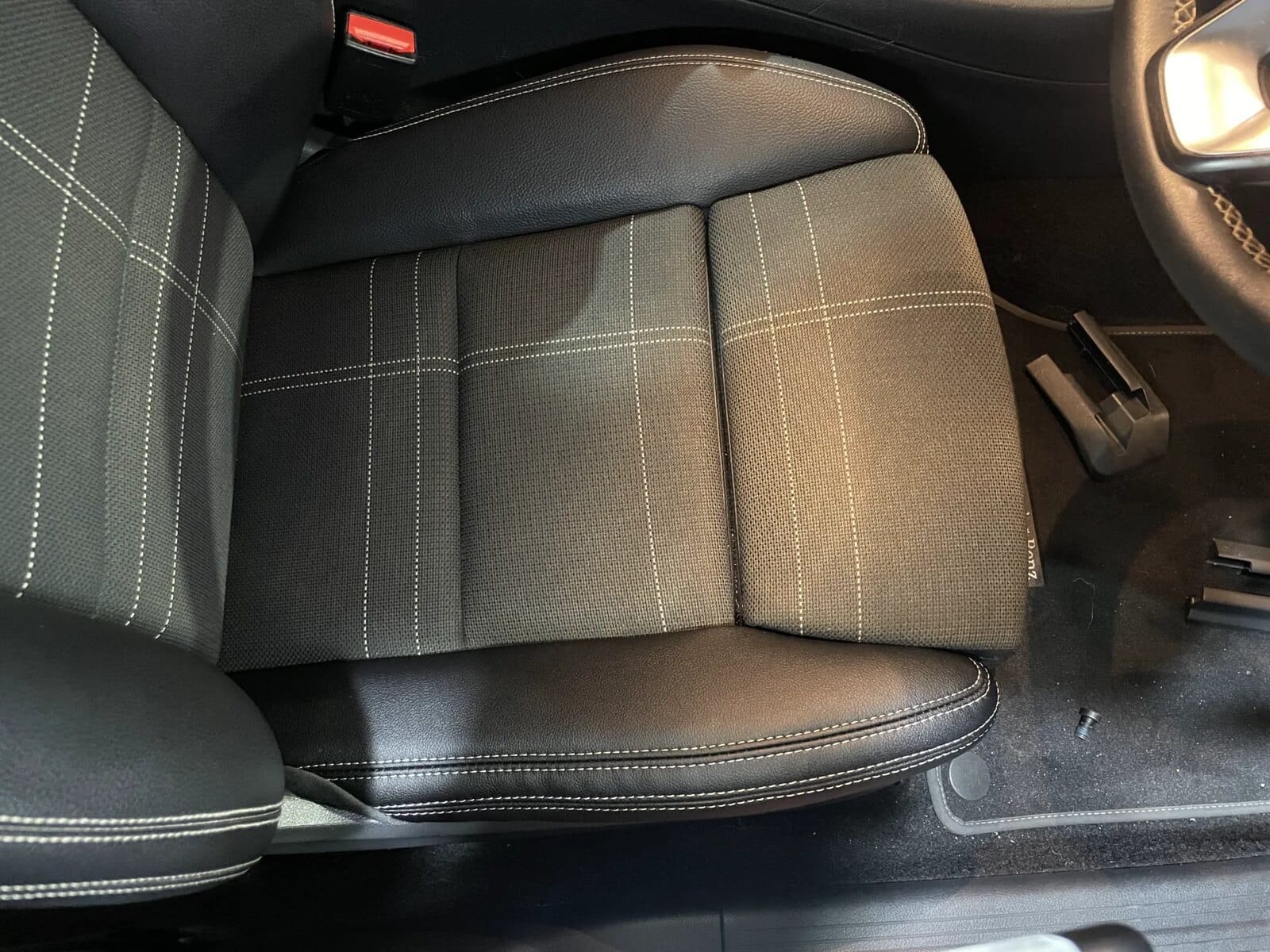
BEFOREAFTERThe torn leather at the outer side of the seat was replaced while the usable centre leather and surrounding upholstery were retained.
The leather at the outer side of the seat had worn through while the rest of the upholstery remained usable. Only the damaged section was replaced; leather and thread were selected to coordinate with the existing seat.
A localised repair is most effective when the problem is limited to one or two defined areas and the surrounding material remains strong enough to support the work. When deterioration has spread across the seat or interior, repairing individual sections one by one may no longer provide the best long-term value.
The lowest-cost repair today is not always the most economical repair over time. We assess the damaged area together with the condition of the surrounding upholstery and underlying component. Final suitability is confirmed after inspection.
We can assess torn, peeling or cracked leather at the seat side or centre, split seams, centre-console armrests, fold-down armrests, upholstered door trims and selected seat-back pocket areas. Suitability depends on the construction and condition of each part.
No. One or two local cracks may be suitable when the surrounding leather remains flexible and strong. Widespread fine cracking, dryness, hardening or brittleness usually indicates broader material ageing and may make wider reupholstery better value.
No. Suitability depends on where the damage is, how the seat is constructed, the material and colour available, and whether the leather around the damage is still strong.
We coordinate the colour, grain, surface character and thread as closely as practical. Ageing, sunlight and cleaning can change original upholstery, so matching is assessed against the interior as it exists today.
No. Many straightforward repairs involving one leather section may take approximately two hours, but timing depends on the part, damage, material availability and required work.
Send your vehicle make and model, one wider photograph showing where the damage is located, and clear close-ups. You do not need to know the technical name of the part.